Concrete strength, how is it achieved?
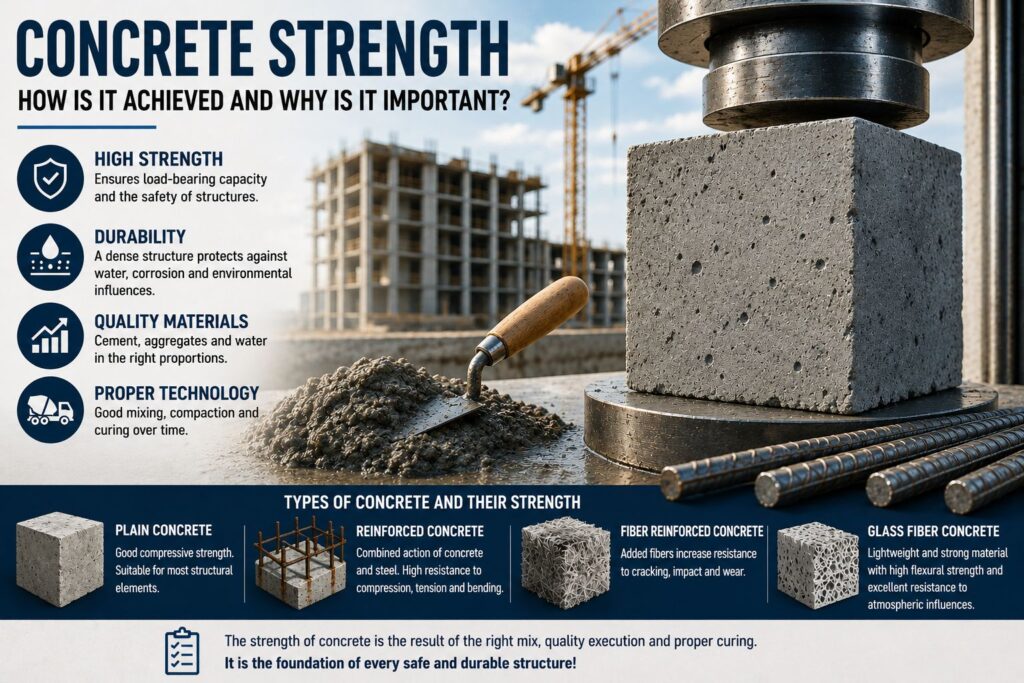
Concrete strength, how is it achieved, it is one of the most widely used construction materials in the world. The reason is simple. It combines high load-bearing capacity, excellent durability, and a long service life. When discussing concrete strength, the term usually refers to its ability to withstand compressive forces without failure. This property determines whether a structure will remain safe and reliable for decades. Strength does not depend solely on the amount of cement used. The water-to-cement ratio, the quality of the aggregates, proper mixing, effective compaction, and correct curing all play a crucial role. Even concrete made with an excellent mix design can develop lower strength if it is not kept sufficiently moist during the first few days after placement. Cement hydration occurs gradually, creating the internal structure that provides the required mechanical resistance. International construction standards determine concrete strength through laboratory testing of sample specimens, with the most common evaluation performed after 28 days.
What determines concrete strength
A good mix design is only the beginning. True strength is achieved through the proper execution of every stage of the construction process. The better each stage is controlled, the more predictable the mechanical properties of the material become. In practice, engineers monitor numerous factors because each one affects the final performance. Even the ambient temperature can influence the development of concrete strength during the first days after pouring.
- proper water-to-cement ratio
- high-quality aggregates with suitable grading
- effective compaction to reduce air voids
- proper curing and moisture maintenance
- sufficient time for full strength development
How is concrete strength measured
The measurement of concrete strength is carried out through standardized tests that provide an objective assessment of quality. Cylindrical or cube-shaped specimens made from the same concrete mix are most commonly used. These samples are stored under controlled conditions and tested using specialized hydraulic compression machines. The results are expressed in megapascals (MPa). The higher the value, the greater the concrete’s ability to withstand loads. In addition to laboratory testing, non-destructive methods such as ultrasonic testing and rebound hammer testing can be used on existing structures. Although these methods do not replace laboratory testing, they provide valuable information about the condition of the concrete. Modern construction standards require continuous quality control throughout production and placement because even minor deviations can affect the safety and durability of a structure.
What do the tests reveal
No test result is accidental. Every measurement helps engineers determine whether the concrete meets the design requirements and whether the structure can safely withstand the intended loads.
- the standard evaluation is usually performed after 28 days
- results are measured in MPa
- both laboratory and non-destructive testing methods are used
- quality control ensures construction reliability
We will now examine the strength characteristics of the most commonly used types of concrete.
Strength of plain concrete
Plain concrete is a mixture of cement, water, sand, and coarse aggregates. It is the most commonly used construction material for residential, commercial, and industrial buildings. Strength of plain concrete is primarily determined by the quality of its ingredients and the ratio between water and cement. A lower water content generally allows a denser internal structure to develop, provided the mix remains workable enough for placement. The use of suitable plasticizers makes this possible without compromising workability. Proper vibration is also essential because it reduces the formation of internal voids. After placement, the concrete must be protected from premature drying, as moisture is necessary for proper cement hydration. The combination of high-quality materials and correct construction practices provides the structural load-bearing capacity required for long-lasting performance.
Factors contributing to high strength of plain concrete
Practical experience shows that even small changes in construction techniques can significantly affect the final strength of concrete. For this reason, producing high-quality concrete requires continuous quality control and strict adherence to technological procedures.
- low water-to-cement ratio
- high-quality Portland cement and clean aggregates
- proper vibration and compaction
- correct curing and moisture maintenance during the first few days
Strength of reinforced concrete
Strength of reinforced concrete results from the combined action of concrete and reinforcing steel. Each material performs a different function, making this combination exceptionally effective. Concrete carries high compressive loads, while reinforcing steel compensates for its lower tensile strength. Thanks to the strong bond between the reinforcement and the concrete, loads are distributed evenly throughout the structure. This allows the construction of columns, slabs, beams, and foundations with outstanding reliability. To achieve the required structural performance, the reinforcement must be positioned correctly, and the concrete must reach its specified design strength. Insufficient concrete cover or poor quality control during concrete placement can reduce the durability of the structure. For this reason, modern construction standards impose strict requirements on both concrete quality and reinforcement installation.
What provides high strength in reinforced concrete
Properly designed reinforced concrete combines the advantages of two materials that effectively compensate for each other’s weaknesses. This is why it remains the primary structural material in modern construction.
- concrete resists compressive forces
- reinforcing steel carries tensile forces
- strong bond between concrete and steel is essential
- proper construction increases the service life of the structure
Strength of fiber reinforced concrete
Fiber reinforced concrete is a concrete mixture containing short fibers made of steel, polypropylene, basalt, carbon, or other materials. Their primary purpose is not to replace conventional reinforcement but to improve the behavior of concrete under different loading conditions. Strength of fiber reinforced concrete is enhanced because the fibers help prevent the formation and propagation of microcracks during the early stages of curing. This makes the material more resistant to dynamic loads, impacts, vibrations, and cyclic loading. When the appropriate type and amount of fibers are selected, the concrete maintains its integrity even after the first cracks appear. For this reason, fiber reinforced concrete is widely used in industrial floors, tunnels, bridges, parking structures, pavements, and facilities exposed to demanding service conditions. In addition to increasing mechanical performance, the fibers improve the long-term durability of the structure by reducing the penetration of water and aggressive chemicals through cracks. This extends the service life of the concrete and reduces the need for costly repairs.
Advantages of strength of fiber reinforced concrete
The addition of fibers improves not only the load-bearing capacity but also the overall performance of concrete under real service conditions. This makes the material a preferred choice for modern infrastructure projects.
- limits the development of microcracks
- increases resistance to impact loads
- improves wear resistance
- reduces the need for future repairs
Strength of glass fiber reinforced concrete
Glass Fiber Reinforced Concrete (GFRC) is a composite material reinforced with specially developed alkali-resistant glass fibers. These fibers differ from ordinary glass and are specifically designed to withstand the highly alkaline environment created by cement. Strength of glass fiber reinforced concrete is achieved through the uniform distribution of these fibers throughout the concrete mix. The result is a material with high flexural strength and significantly lower weight compared to conventional concrete. This makes it possible to manufacture thin architectural panels, façade elements, decorative components, and complex structural shapes. Glass fiber reinforced concrete also offers excellent resistance to weathering, freeze-thaw cycles, and corrosion. Proper manufacturing is essential because both the quality of the fibers and their even distribution determine the final mechanical properties of the finished product. When produced correctly, GFRC provides an outstanding combination of strength, lightweight performance, and long service life.
Advantages of strength of glass fiber reinforced concrete
Glass fibers make it possible to produce lightweight yet exceptionally strong concrete elements. This expands the possibilities of modern architecture and structural engineering.
- high strength with relatively low weight
- excellent resistance to weather conditions
- high resistance to cracking
- suitable for complex architectural designs
Why is concrete strength important?
Safety and load-bearing capacity
Concrete strength is one of the most important indicators of structural safety. It determines whether a building, bridge, or engineering structure can reliably support its own weight, service loads, wind, snow, and other external forces. Insufficient strength increases the risk of deformation, excessive cracking, and even structural failure. That is why engineers define the required concrete class during the design stage. Every structural element is calculated so the material operates safely within its design limits. Quality control during production, transportation, placement, and curing is just as important as the design itself. Properly executed concrete provides reliable performance for decades while minimizing the risk of expensive repairs. International construction standards identify concrete strength as one of the key requirements for the acceptance of any concrete structure.
What high concrete strength guarantees
High-quality concrete is more than just a strong material. It ensures reliable performance, lower maintenance costs, and a significantly longer service life for buildings and engineering structures.
- ensures structural safety
- withstands the designed loads
- reduces the risk of structural damage
- extends the service life of the structure
- minimizes the need for costly repairs
Durability during service life
Besides its load-bearing capacity, concrete strength directly influences resistance to environmental conditions. Stronger concrete generally has a denser internal structure, making it more difficult for water, salts, carbon dioxide, and other aggressive substances to penetrate. As a result, the reinforcing steel remains better protected against corrosion, and the structure retains its performance for a much longer period. In regions exposed to repeated freeze-thaw cycles, higher concrete strength significantly reduces the risk of surface deterioration. The same applies to industrial facilities, where concrete is subjected to chemical exposure or heavy mechanical loads. The combination of high strength, a properly designed mix, and quality workmanship ultimately determines the long-term durability of any concrete structure.
Why high-quality concrete lasts longer
A long service life is never a coincidence. It is the result of careful material selection and strict compliance with construction and curing requirements.
- limits moisture penetration
- protects reinforcing steel from corrosion
- improves resistance to freeze-thaw cycles
- increases resistance to chemical exposure
- extends the service life of the structure
Summary
Concrete strength is a key factor that determines the reliability, safety, and service life of every concrete structure. It is not achieved by chance but is the result of selecting the right materials, accurately proportioning the mix, using proper placement techniques, and ensuring correct curing conditions. Every stage of the construction process has a direct impact on the final mechanical properties of concrete.
Different concrete technologies provide different performance characteristics depending on the intended application. That is why the strength of plain concrete, strength of reinforced concrete, strength of fiber reinforced concrete, and strength of glass fiber reinforced concrete each offer unique advantages for specific construction projects. Selecting the appropriate type of concrete improves load-bearing capacity, enhances resistance to environmental influences, and significantly extends the service life of a structure. When all technological requirements are followed, concrete remains one of the strongest, most durable, and most reliable construction materials used in modern engineering.
Why proper concrete selection matters
Choosing the right type of concrete is essential for ensuring long-term structural performance and minimizing future maintenance costs.
- improves structural safety
- increases long-term durability
- enhances resistance to environmental conditions
- reduces maintenance and repair costs
- ensures reliable performance throughout the structure’s service life
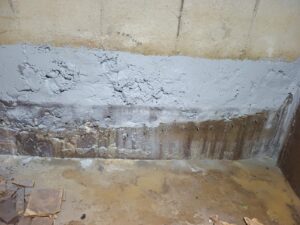
If, despite its strength, concrete develops cracks over time, water can eventually penetrate the structure. If you are experiencing water leaks through a concrete wall, foundation, slab, or any other concrete element, do not hesitate to contact us. Follow us on Facebook for more useful information and professional advice.