Concrete injection
Essence of concrete injection: Crack repair
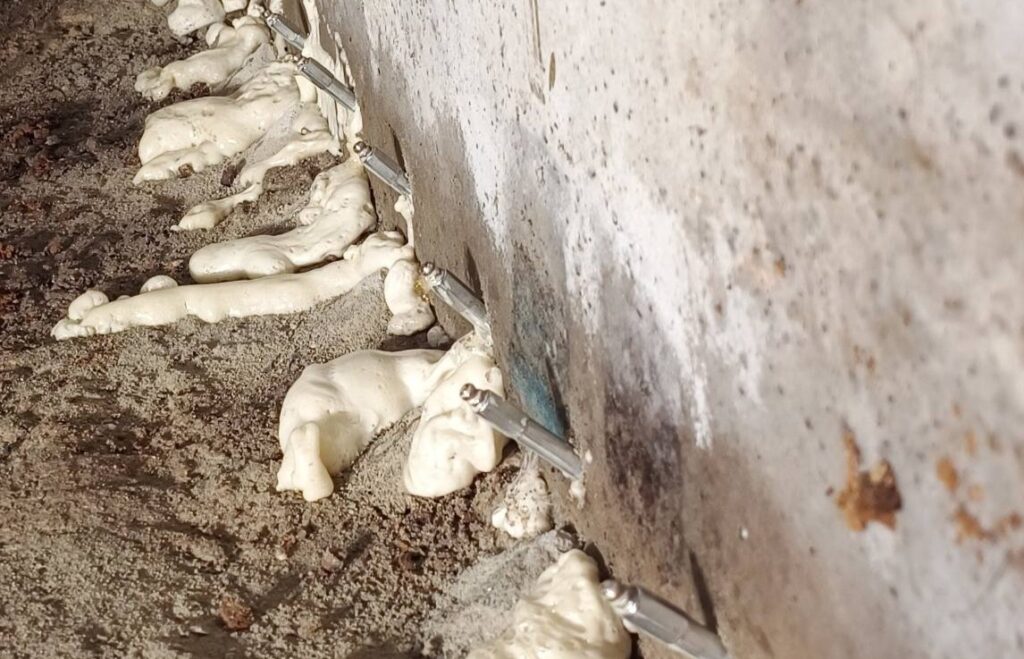
The process of concrete injection is a highly specialized method for repairing concrete structures, aimed at sealing cracks and restoring waterproofing integrity and, in some cases, the structural strength of the material. This technique is becoming an increasingly preferred alternative to traditional methods, especially when it comes to stopping active leaks or providing long-term sealing of areas exposed to water pressure. Injection is carried out by high-pressure pumping of specially developed injection materials – usually polyurethane resins, epoxy resins, or microcement suspensions – directly into the cracks or voids of the concrete. The choice of material depends on the type of crack (dry, wet, active leak) and whether an elastic seal or structural restoration is required. This method ensures complete filling and penetration even into the finest cracks, making it extremely effective for protection against water ingress and subsequent degradation of the concrete.
Advantages of injection for stopping leaks
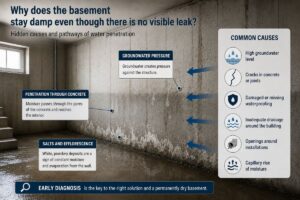
The main advantage of concrete injection is its proven effectiveness in stopping leaks and ensuring watertightness in underground structures, basements, elevator shafts, and other areas exposed to water pressure. Upon contact with water, polyurethane resins often react and expand, forming a dense, elastic seal that can accommodate future structural movements without compromising the waterproofing.
-
Provides long-term waterproofing and protection
-
Effective for active leaks and wet cracks
-
Restores structural integrity when using epoxy resins
-
Minimal destructive work compared to traditional repair
-
Fast curing process and resumption of use
Types of injection materials and technologies
Different problems require different injection materials. Polyurethane resins are ideal for elastic sealing and leak stopping, as they react with water and create a watertight barrier. Epoxy resins are mainly used for structural repairs of dry or slightly damp cracks, where restoring the load-bearing capacity of the concrete is necessary, as they harden with high strength. Microcement suspensions are applied for filling larger voids or for injection into masonry and soils for stabilization. The technology involves drilling holes, installing injection packers (nozzles), and pumping the material using injection pumps under controlled pressure.
-
Polyurethane resins for water stopping and elasticity
-
Epoxy resins for structural reinforcement and hardness
-
Microcement suspensions for cavity filling and stabilization
-
Use of packers and pumps for precise injection
-
Materials penetrate cracks as fine as 0.1 mm
Execution process: From diagnosis to sealing
Successful concrete injection begins with a detailed diagnosis of the problem. First, all cracks are identified, their type (static or active), and the presence of water ingress. Next comes surface preparation – cleaning and marking the drilling points for injection holes. The holes are drilled at an angle to intersect the crack in depth, after which injection packers are installed. Resin pumping starts from the lowest point of the crack, moving to the next packers until the material begins to emerge from an adjacent packer, indicating complete filling of the crack. Pressure is carefully monitored to ensure maximum penetration without damaging the structure.
-
Diagnosis and analysis of cracks
-
Cleaning and preparation of the concrete surface
-
Drilling holes for injection packers
-
Installation of packers and resin pumping
-
Removal of packers and final sealing
Importance for the construction industry and durability
Injection technologies play a key role in modern construction and infrastructure repair. They provide cost-effective and long-lasting solutions to problems related to water ingress and structural defects in concrete, thereby extending the service life of buildings, bridges, tunnels, and other facilities. The ability for rapid intervention and minimal disruption makes concrete injection an indispensable method, especially for structures with high waterproofing requirements. This approach helps prevent reinforcement corrosion and associated structural damage, ensuring safety and durability of constructions over time.
-
Extends the life of concrete structures
-
Prevents corrosion of steel reinforcement
-
Cost-effective alternative to full reconstruction
-
Important method for repairing critical infrastructure
-
Provides resistance against external aggressive factors
Donchev Construction Ltd: Professional injection
Donchev Construction Ltd specializes in providing concrete injection services against cracks and leaks. The company has experienced teams and uses high-quality injection materials from leading global manufacturers, as well as modern equipment for precise pumping. This commitment to quality ensures that every project is executed with maximum efficiency and long-lasting results. Whether it is small cracks in a residential building or complex waterproofing problems in industrial facilities, Donchev Construction Ltd offers reliable and customized solutions. Their expertise guarantees successful leak elimination and restoration of the integrity of concrete structures.
-
Performs concrete injection with expertise
-
Works with proven, high-quality materials
-
Uses modern and reliable equipment
-
Provides long-term and reliable results
Conclusion: concrete injection against cracks
Conclusion, concrete injection against cracks is an indispensable technology in modern construction repair, offering highly effective and long-term solutions to problems related to waterproofing and structural integrity of concrete elements. Through precise high-pressure pumping of special resins or suspensions, this method seals cracks from within, stopping active leaks and preventing further material degradation, which is crucial for protecting reinforcement from corrosion. The use of different materials – from elastic polyurethane resins to structural epoxy resins – allows a customized approach to each defect, ensuring not only waterproofing but also restoration of load-bearing capacity when necessary.
The process is minimally invasive and significantly faster compared to traditional repair methods, making it a cost-effective choice. Proper execution requires expert knowledge and specialized equipment to guarantee full penetration and durable sealing. Companies like Donchev Construction Ltd, which work with proven materials and professional teams, are a guarantee for successful application of this technology and long-term protection of construction investments.
-
The technology provides long-term solutions against cracks and leaks
-
Specialized resins are used for elastic or structural sealing
-
The method is minimally invasive and prevents reinforcement corrosion
-
A key factor is professional execution with quality materials and equipment
-
Injection is essential for maintaining the service life of structures