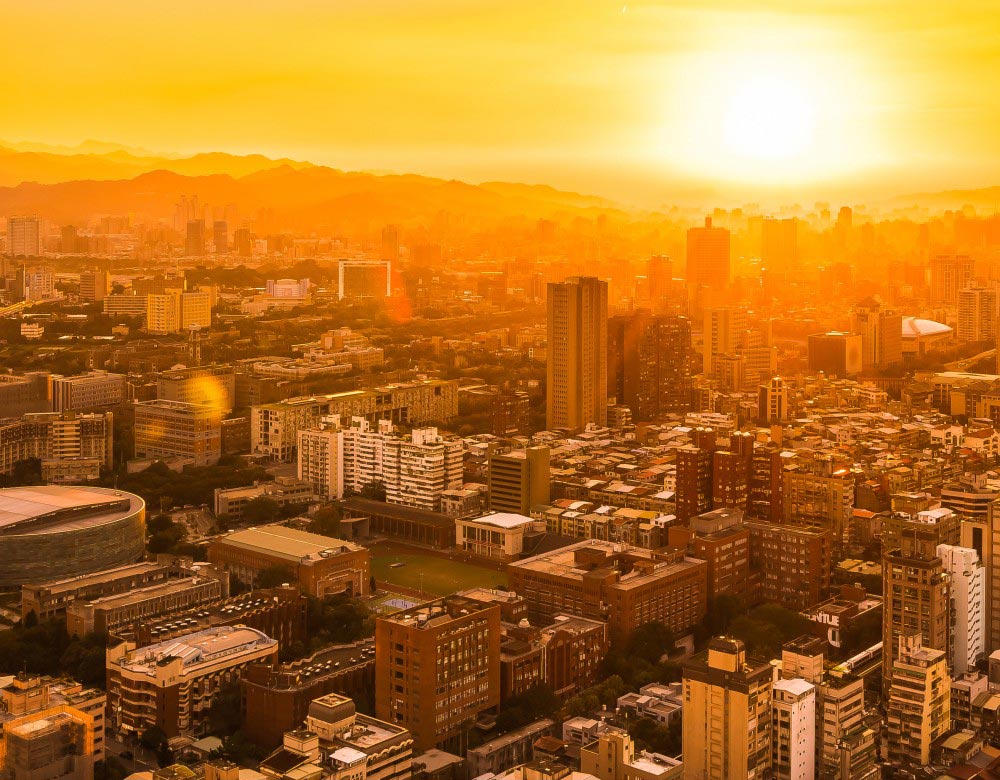
Extreme heat and concrete, the invisible collision in the urban environment.
In recent decades, extreme heat has become one of the most serious climate challenges humanity faces. Cities, with their dense infrastructure and predominantly hard surfaces, are particularly vulnerable. Among all the materials that shape the urban landscape, concrete plays a key role – not only as a structural element but also as a factor that influences the microclimate and quality of life.
The thermodynamics of concrete: what happens at high temperatures?
Concrete is a material with high thermal mass, which means it has the ability to absorb and retain large amounts of heat. During the day, when the sun shines intensely, concrete surfaces absorb solar energy and heat up to temperatures that can exceed 60°c. This heat is released back into the atmosphere at night, but the process is slow and inefficient. Especially when there are not enough green spaces or water elements to assist in cooling.
This phenomenon leads to the formation of the so-called “urban heat island”. A phenomenon where urban areas are significantly warmer than the surrounding rural or natural territories. The temperature difference can reach 5-10°c, which has serious consequences for health, energy consumption and ecological balance.
Structural consequences for concrete in extreme heat.
Although concrete is perceived as a strong and resilient material, high temperatures can trigger a number of physical and chemical changes that compromise its durability and safety.
- First, thermal expansion is inevitable. When heated, concrete expands, and when cooled, it contracts. If the structure is not designed with adequate expansion joints, this leads to internal stresses that can cause cracks, layer detachment and even structural damage.
- Second, with prolonged exposure to high temperatures, the binding properties of cement. The main component of concrete, begin to weaken. This leads to a reduction in strength and resistance of the material. Especially in buildings, bridges and roads that are subjected to constant loads.
- Third, UV rays and heat accelerate processes of erosion and aging. Surfaces begin to crumble, and the reinforcemen, if not well protected, may corrode, which further weakens the structure.
Impact on the urban environment and human health.
Hot concrete is not just an engineering challenge – it has a direct impact on the quality of life in cities. Elevated surface temperatures make cooling buildings more difficult. Which increases the need for air conditioning and consequently, energy consumption. This creates a vicious cycle, where the use of electricity contributes to additional greenhouse gas emissions and even higher temperatures.
Moreover, high temperatures in the urban environment increase the risk of heat stroke. Especially in vulnerable groups, children, elderly people and those with chronic illnesses. Concrete surfaces such as sidewalks, squares and parking lots become dangerous zones where surface temperatures can cause burns upon skin contact.
Not least, hot concrete contributes to deteriorating air quality. At high temperatures, chemical reactions between pollutants and sunlight intensify, leading to the formation of ozone and other harmful compounds.
Innovative solutions for sustainable urban development.
In response to these challenges, architects, engineers and urban planners are developing new approaches to address the effect of extreme heat on concrete infrastructure.
One of the most effective solutions is the use of reflective coatings, special paints and materials that reduce solar energy absorption and maintain a lower surface temperature.
Green roofs and facades are also gaining popularity. They not only improve the aesthetics of buildings but also act as natural coolers that reduce temperature and improve air circulation.
Permeable concrete, a material that allows water to penetrate, helps cool surfaces and reduces the risk of flooding during heavy rainfall.
Additionally, the integration of shaded structures, water elements and urban greenery creates a microclimate that mitigates the effects of heat and enhances residents’ comfort.
Extreme heat and concrete, conclusion.
Concrete is an inseparable part of the modern urban environment. But in the context of climate change it becomes a challenge that requires new thinking and adaptive solutions. Extreme heat is not just a seasonal inconvenience. It is a factor that affects health, the economy and the sustainability of our cities. To build a future where concrete is not an enemy but an ally, we must rethink it – as a material, as an environment and as part of the ecosystem in which we live.