Waterproof concrete, what we need to know
In construction, moisture is a constant factor that cannot be ignored. Rain, groundwater, condensation, and temperature differences affect structures on a daily basis. This is exactly why the topic of waterproof concrete is becoming increasingly relevant. It is not just a trendy term, but a practical solution for areas with high humidity, where standard concrete begins to show weaknesses after only a few years.
Water-resistant concrete is developed with a specific goal – to limit the penetration of moisture deep into the structure. This is achieved through precise control of the composition, the quality of the materials, and the method of placement. As a result, the concrete retains its strength, does not crumble, and protects the reinforcement from corrosion, which is one of the most common causes of costly repairs.
It is important to know that waterproof concrete is not a magical solution that compensates for poor workmanship. It works best when it is properly designed, well compacted, and maintained. In such cases, the investment pays off with years of safety, lower costs, and a longer service life of the structure.
Waterproof concrete, does it exist
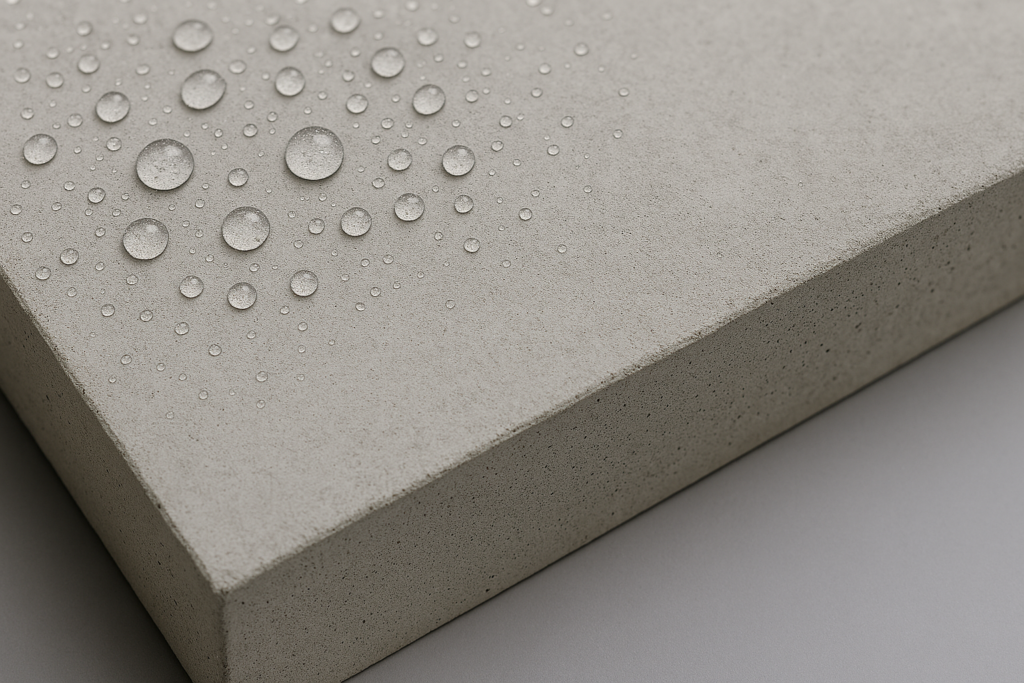
The question of whether waterproof concrete really exists often raises doubts. There is no completely impermeable concrete, but water-resistant concrete is absolutely real and proven in practice. It is characterized by much lower water absorption compared to standard mixes and can withstand long-term contact with water without structural damage.
This is achieved through the use of special additives that fill micropores or react with moisture and form crystals within the structure. Another important factor is the water-cement ratio – the lower it is, the denser and stronger the concrete becomes. Water-resistant concrete also relies on proper vibration, which removes air voids.
-
use of hydrophobic and crystallizing additives
-
controlled water-cement ratio
-
dense and uniform compaction
Which types of concrete are water-resistant?
In practice, there are several types of water-resistant concrete mixes that are used depending on specific conditions. The most common is concrete with crystallizing additives, which self-seals microcracks when in contact with moisture. There are also high-density concretes with added polymers that significantly reduce porosity.
Waterproof concrete can also be combined with external or internal waterproofing, which increases protection under extreme conditions. This approach is often applied in underground and hydraulic structures.
-
concrete with crystallizing additives
-
high-density concrete with polymers
-
concrete with additional waterproofing
Where waterproof concrete is used
Waterproof concrete is used wherever moisture is constant or periodic. It is most commonly applied in building foundations, basements, and underground garages, where contact with soil moisture is inevitable. Water-resistant concrete is also standard for swimming pools, water tanks, and treatment facilities.
Agricultural and industrial facilities also rely on water-resistant concrete, especially for channels, shafts, and rooms with frequent washing. In these cases, reliability and easy maintenance are of key importance.
-
foundations, basements, and underground levels
-
swimming pools and water reservoirs
-
industrial and agricultural facilities
Advantages of waterproof concrete
The greatest advantage of waterproof concrete is its durability. It retains its mechanical properties for a much longer time compared to standard concrete. Water-resistant concrete protects the reinforcement from corrosion, which is critical for load-bearing structures.
In addition, water-resistant concrete reduces the need for additional repairs and expensive waterproofing in the future. In the long term, this leads to lower costs and higher property value.
Waterproof concrete, conclusion
Water is a factor that cannot be avoided, but it can be controlled. With the right choice of waterproof concrete and professional execution, structures become more reliable and durable over time. Water-resistant concrete is not an unnecessary expense, but a reasonable investment in safety, longevity, and peace of mind for years to come.
Follow us in FB