Water leakage from a concrete wall – why we must not wait, but seek a solution immediately?
Brief description:
Water leakage from a concrete wall is a serious problem and a threat to your building’s structure, your health, and your budget. Ignoring it can lead to costly repairs, a diminished quality of life, and even compromise the entire building. That is why it is critically important to act as soon as the first signs of moisture, stains, or dripping water appear on the wall.
Additional description:
In this article, we examine the causes, the consequences, and—most importantly—why immediate action is the best strategy. If you are looking for a practical guide and an in‐depth understanding of the problem, you will find it here.
What does water leakage from a concrete wall actually mean?
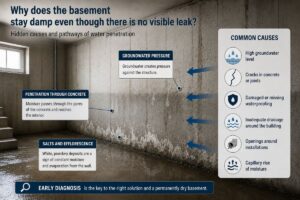
Water leakage from a concrete wall occurs when water seeps through microcracks, joints, or improperly waterproofed concrete. This can happen in exterior walls exposed to rain and moisture as well as in interiors, for example in basements, cellars, or sanitary areas.
The main sources of moisture can be:
surface or groundwater,
leaks from plumbing installations,
condensation and poor ventilation,
substandard or outdated waterproofing.
Even though it may appear harmless at first glance, the moisture in the concrete gradually and surely starts to damage its structure and aesthetics.
What are the risks if we delay solving the problem?
Moisture in concrete walls does not vanish on its own; in fact, over time the problem worsens. Water penetrates deeper, expands existing cracks, damages the reinforcement, and creates ideal conditions for mold, fungi, and bacteria.
Common consequences of neglected leakage include:
compromised load-bearing structure,
detachment of plaster, paint, and finishes,
allergies and respiratory problems due to mold,
high repair and restoration costs.
Sometimes the leak is hidden—for example, behind thermal insulation or beneath the floor screed. That is why early diagnosis and intervention are absolutely essential.
How does moisture damage the concrete?
Concrete is strong, but it is not indestructible. When moisture penetrates its pores and cracks, it begins to act in two main ways: physically and chemically.
Physical damage occurs when water freezes, expands, and disrupts the surface. Chemical damage is even more dangerous—water activates salts that form crystals and push the structure from within. Over time, this results in cracking, delamination, and corrosion of the reinforcement.
Why is fast intervention economically wise?
The earlier you intervene, the lower the costs will be. A localized leak and timely waterproofing can be remedied with a repair costing only a few hundred lev. However, if delayed, you may end up needing to replace entire walls, floor screeds, or even installations—a total investment of thousands.
Long-term moisture leads to:
Early action saves not only money but also time and stress.
How can we detect the leakage before it’s too late?
Often the leakage is not noticed immediately, especially if it is hidden within the structure. However, there are clear signs that indicate a problem:
yellowish stains or circles appearing on the wall,
blistering or peeling paint,
a smell of moisture or mold,
cold spots on the wall despite heating,
deteriorating air quality.
If you notice any of these, consult an expert. Professional diagnostics using a thermal camera or moisture meter can locate the problem without any demolition.
What are the most common causes of water leakage from a concrete wall?
Leaks may have various origins, but the most common include:
compromised waterproofing in basements and cellars,
poor jointing between concrete panels,
leaks from a roof or gutter system,
cracked or outdated water pipes,
condensation from HVAC systems.
Proper diagnosis will pinpoint the exact cause—a key factor for a successful and lasting solution.
What solutions can we apply?
The solution always begins with locating the leak. Depending on the cause, the approach may include:
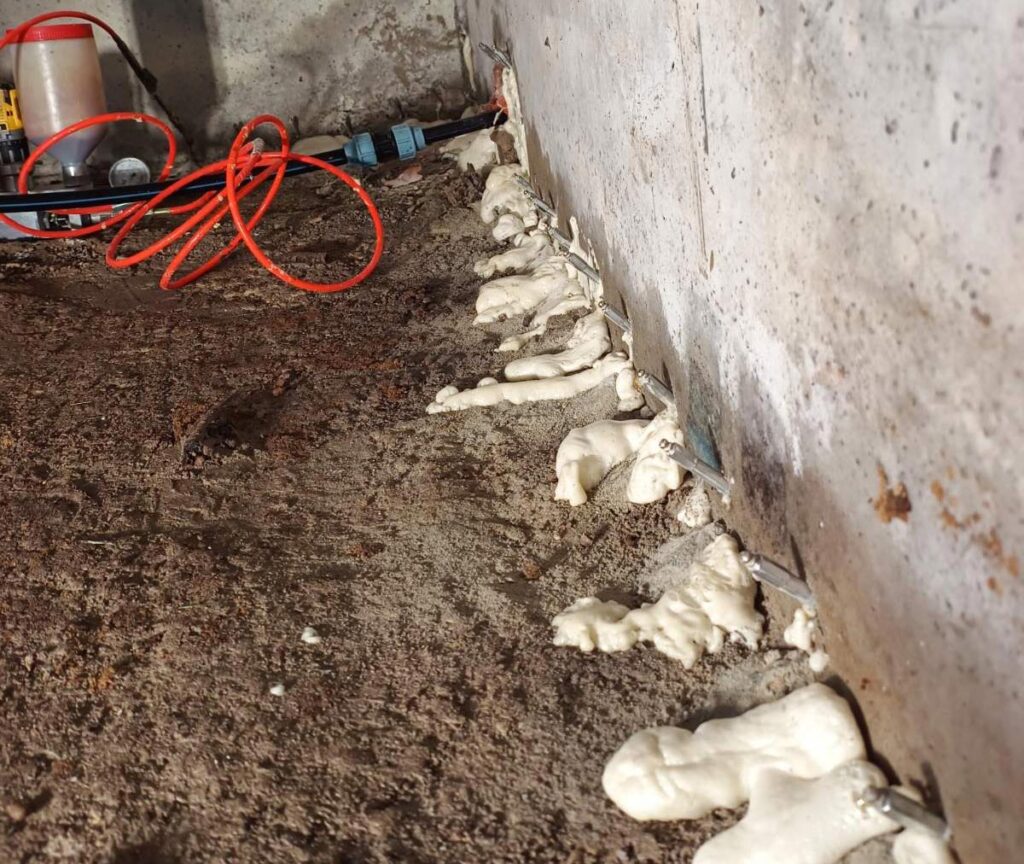
injection of polyurethane or acrylic resins for sealing,
replacement or restoration of waterproofing,
correction of drainage systems,
repair of plumbing installations,
additional external or internal insulation.
In some cases, specialized paints or coatings that repel moisture are also used.
How long does a quality repair take?
The time required depends on the extent of the problem. A localized leak can be repaired within one or two days, especially if no demolition is needed. More serious issues, such as replacing waterproofing or applying new plaster, may take between three to seven working days. It is crucial that the repair be performed by specialists who use modern materials and offer a warranty.
When should you seek professional help?
If you are unsure about the cause of the leak, it is better not to risk a “do-it-yourself” fix. Home remedies like silicone, paint, or tape only cover up the problem without resolving it. Instead, seek out a company experienced in waterproofing, concrete repairs, and moisture-resistant coatings. Look for professionals who:
offer inspections and diagnostics,
use proven materials and technologies,
provide a warranty for the repair,
work in a clean and organized manner.
Conclusion, water leakage from a concrete wall
Water leakage from a concrete wall is a problem that never goes away on its own. The longer it is delayed, the more severe and expensive the consequences become. Therefore, do not wait for mold to appear, for the plaster to blister, or for the wall to collapse. Seek a timely solution to avoid inconvenience, illness, and unnecessary expenses.
Whether you own an apartment, a house, or a commercial building, moisture is the enemy of your peace of mind and the value of your property. Invest in a quality solution today to avoid paying twice tomorrow.